HEATING SOURCES

Cold weather means many residents will be turning on heating systems that have not been used since spring. Before heating systems are turned on, they should be checked to make sure they will operate properly and safely. A family member can do this but remember to read and follow all instructions carefully. Instructions are supplied by the manufacturer and usually are located on the inside door cover near the pilot light. If you cannot locate the instructions or are unsure of what you are doing, call a professional service person or someone qualified to ensure the job is done correctly.
WALL HEATERS
Â
Wall heaters should be checked for proper ignition and proper ventilation. Soot or black marks on the wall can mean that the burner jets are dirty or not adjusted to burn the fuel properly. This means higher amounts of carbon monoxide are being created. Without ventilation to the outside, carbon monoxide fumes accumulate in the home. A flushed face or a slight headache can be the first signs of carbon monoxide poisoning. If this happens, get everyone out of the house and call 9-1-1 for the fire department from a neighbor’s house.
PORTABLE HEATERS
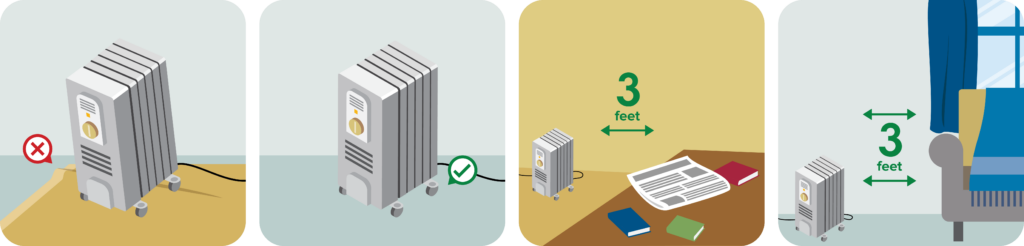
Space heaters need at least three feet of space between the heater and combustibles like drapes, furniture, and beds. Also, make sure small children cannot get near space heaters and suffer contact burns from touching them. As with any electrical appliance, check the cord to make sure it is not frayed or worn. Extension cords should not be used with electric space heaters. Electric space heaters also are dangerous in the bathroom because of cramped space and radiated heat as well as the danger of electrical appliances and water. Never touch an electric space heater if your hands are wet or if you are in contact with water. Never leave a space heater on when you go to bed or leave the house.
KEROSENE HEATERS
The Fire Department does not recommend the use of kerosene heaters in homes. If you must use a kerosene heater, be sure to follow the manufacturer’s instructions carefully. Use only the manufacturer’s approved fuel. Store the fuel outside the house and always let the heater cool before filling it outside the home. Kerosene heaters must have adequate ventilation because they use up oxygen inside a room as they operate.
CHARCOAL BRIQUETTES AND BARBECUES
Charcoal briquettes and barbecues should never be used for cooking or heating inside a home or any other closed area. They can quickly fill a closed space with carbon monoxide fumes.
